Meta's Quest 2 and Quest Pro reach 'end of feature development'
· Engadget

The app stores will stay open for both devices after support ends next year.
Visit turconews.click for more information.
· Engadget
Visit turconews.click for more information.
· Free Press Journal

Nashik: Central Railway has decided to reclassify nine long-distance trains from Superfast to Mail/Express status, effective Jan 1, 2027. The list includes two trains operating within Maharashtra, while the remaining seven connect Mumbai to other states. Passengers in Nashik and surrounding districts are now demanding that the Panchavati, Rajyarani and Sevagram Express trains also be reclassified as non-Superfast services.
Visit rhodia.club for more information.
The Superfast designation requires passengers to pay additional charges. A standard reserved ticket costs ₹15 more than that of a non-Superfast service, while fares for air-conditioned coaches are also higher.
For instance, the Sevagram Superfast takes three hours and 45 minutes to travel from Nashik Road to Bhusawal, whereas the non-Superfast Godan Express completes the same journey in three hours and 10 minutes. Passengers are frustrated that they are being charged extra for Superfast status despite receiving no time-saving benefit on this route.
Nashik: Fake Traffic Police Officer Caught Demanding Money From Motorists In Pimpalgaon Baswant |WATCH VIDEOThe Rajyarani Express currently carries a dual classification. It operates as a Superfast train between Banaras and Manmad but as a non-Superfast train between Mumbai and Nanded. Consequently, tickets booked from Mumbai are subject to Superfast fares.
As the Panchavati (12110), Rajyarani and Sevagram Express trains are categorised as Superfast, monthly pass holders and regular commuters say they face an unnecessary financial burden.
Passengers believe that reclassifying these trains as non-Superfast services would not only reduce ticket costs but also put an end to what they describe as an "unfair financial drain" imposed under the guise of Superfast status.
· Free Press Journal
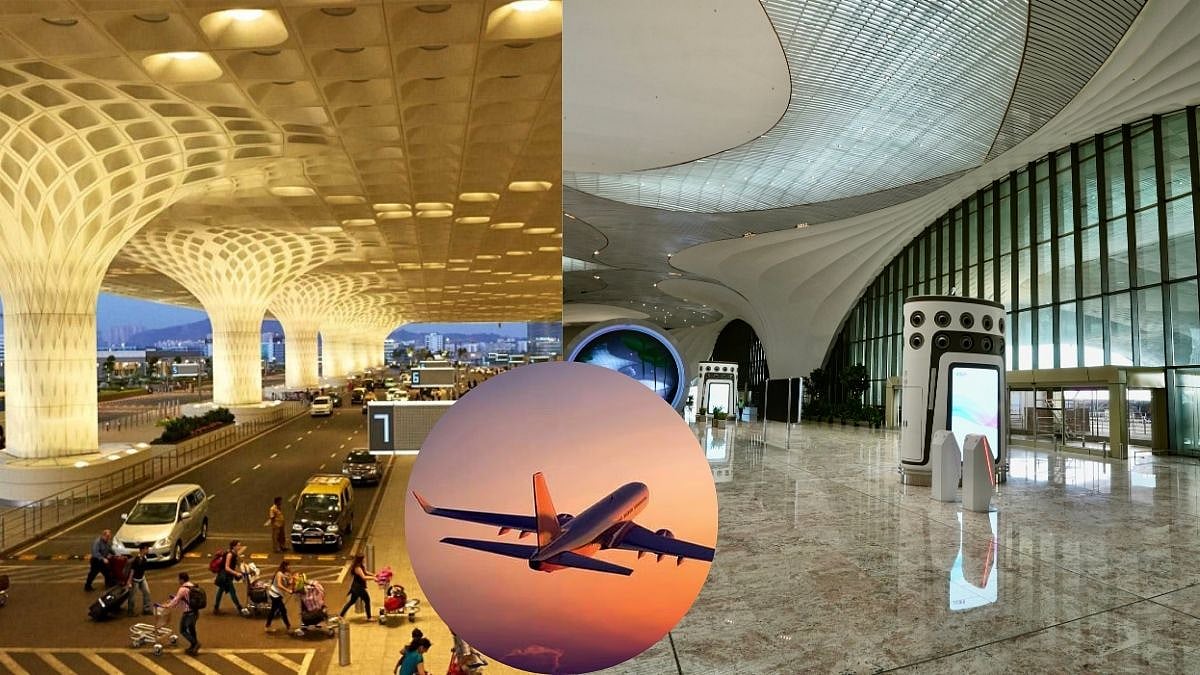
Mumbai: The standoff between Mumbai International Airport Ltd (MIAL) and international airlines has intensified again after the airport operator proposed moving flights to 14 international destinations to Navi Mumbai International Airport (NMIA) from the summer schedule. However, the latter have resisted the plan, calling the airport operator’s proposal and transition plan to make way for Terminal-1 redevelopment a unilateral decision.
The plan, submitted by the Adani Group-led airport operator to the Ministry of Civil Aviation (MoCA), aims to relieve severe operational congestion at Chhatrapati Shivaji Maharaj International Airport (CSMIA). However, it has triggered sharp pushback from several foreign carriers, who have formally petitioned the ministry, calling the decision unilateral, disruptive and operationally inefficient.
Visit casino-promo.biz for more information.
Foreign airlines agree on shifting 14 flights from Mumbai to Navi Mumbai• Foreign airlines operating from Mumbai's Chhatrapati Shivaji Maharaj International Airport have recommended moving some international flights to Navi Mumbai International Airport while Terminal 1 (T1) is rebuilt, according to reliable sources.https://t.co/3cglba0kYB
— IANS (@ians_india) November 4, 2026
Under the plan outlined in MIAL’s submission to the ministry, flights operated by both Indian and foreign carriers connecting Mumbai to 14 key destinations – like Bahrain, Dammam, Dhaka, Doha, Fujairah, Jakarta, Jeddah, Kathmandu, Kuwait, Madinah, Muscat, Ras Al Khaimah, Riyadh and Sharjah – will be systematically transferred to NMIA.
The operator has cited the urgent need to free up capacity at CSMIA’s Terminal 2 (T-2) ahead of planned infrastructure overhauls and safety-related structural assessments of ageing facilities at T-1. MIAL intends to shift around 5 million passengers to the new airport.
The proposal has drawn resistance from international airlines operating out of Mumbai. In a formal representation to the Civil Aviation Secretary, foreign carriers, through industry bodies such as the Mumbai Airline Operators Committee (AOC), have expressed strong objections to the move.
Airlines schedule 2.6% Fewer Flights This Diwali Season As High Airfares Hit DemandThe airlines have alleged that MIAL communicated the mandatory relocation without meaningful prior consultations or a transparent, joint assessment of available slot capacity at CSMIA. International carriers have demanded that MoCA step in to safeguard their legacy slots at CSMIA, warning that a forced relocation compromises long-established commercial schedules.
Major international legacy carriers, including Emirates and Air France-KLM, have pointed out that splitting operations between CSMIA and NMIA creates severe logistical hurdles, affecting interline passenger transfers, crew scheduling, and ground handling. Airlines have also highlighted that higher user charges at NMIA – reportedly up to 3.5 times higher than CSMIA's existing rates – will artificially inflate operating expenses and airfares.
Also Watch:
While foreign carriers remain hesitant, major domestic airlines have taken a more flexible stance. Indian operators, including IndiGo, Akasa Air and the Air India Group, have already outlined phased transition roadmaps to relocate a portion of their domestic and international services – such as routes to Jeddah – to Navi Mumbai starting over the coming months.
Domestic carriers account for roughly three million of MIAL's targeted five-million passenger reduction, leaving the remaining two million dependent on foreign carriers that are holding out.
To get details on exclusive and budget-friendly property deals in Mumbai & surrounding regions, do visit: https://budgetproperties.in/