Mouz

Another cost for Gauteng motorists? Association calls for licence disc fee hike to be halted

· Citizen
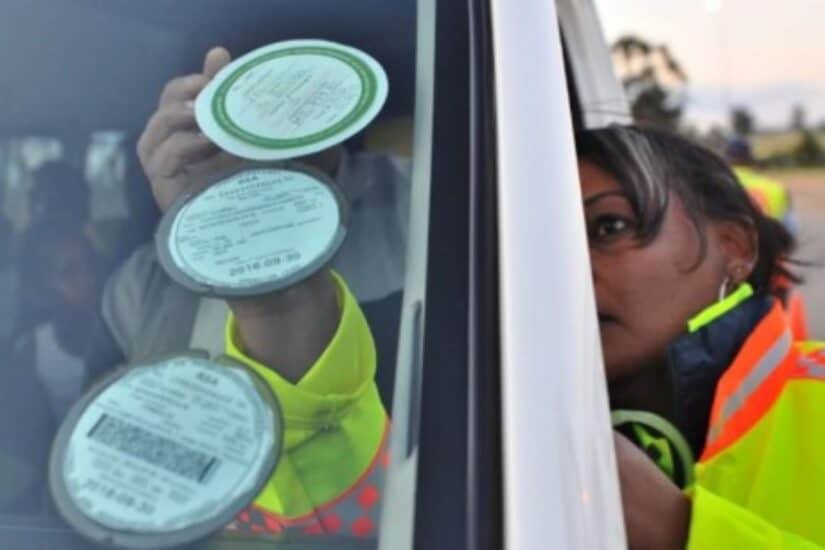
The Motor Industry Staff Association (Misa) is calling on the Gauteng Department of Roads and Transport to withdraw its proposal to increase the provincial licence disc renewal and vehicle registration fee.

Visit moryak.biz for more information.

This comes after Transport Minister Barbara Creecy said her department would not be applying to National Treasury for a hike in the Road Accident Fund (RAF), as South Africans are already facing significant financial pressure.

Misa Operations CEO Martlé Keyter opposes the hikes on the same grounds as the minister; South Africans are already financially overburdened. “Misa calls on government to think very carefully before placing another cost on workers who need a car to get to work.”

Here’s how much motorists might pay

The Gauteng Department of Roads and Transport has since published draft amendments to increase provincial vehicle registration and licence disc renewal fees earlier in the year.

The department proposes a R12 increase to the provincial vehicle registration fee, bringing it to R240. Licence disc renewal fees would increase by between R24 and R156, depending on the vehicle’s weight.

According to Keyter, if the hikes are approved, Gauteng will charge the highest licence disc fees in the country for every vehicle weighing less than 3 500kg.

Hikes to hurt motorists further

Keyter said the proposed hikes look small on paper; however, when put together with petrol price hikes and other costs to maintain a vehicle, they are expensive for motorists.

“Every one of these fees is presented as small and reasonable, but our members pay all of them, out of the same pay slip, in the same month.”

Her comments come after petrol prices crossed the R30 per litre mark for October. Motorists now pay R29.88 per litre for 93 unleaded petrol, R30.25 per litre for 95 unleaded petrol, R31.95 per litre for 0.05% diesel, and R33.29 per litre for 0.005% diesel.

“Last week petrol crossed R30 a litre in Gauteng, adding R133 to the cost of filling a 40-litre tank. Electricity, food and transport costs have outrun household budgets for most of this year,” she added.

Will Gauteng deliver another blow?

It is currently unclear when the increases for provincial licence disc renewal and vehicle registration fees will kick in, or whether they will be implemented at all.

The department accepted public comment until 23 September 2026 and is now reviewing the submissions.

“Misa calls on the MEC [of Roads and Transport] to withhold approval of the proposed fee increases.”

Cut fuel levies

Calls have been made to temporarily cut fuel levies to give motorists breathing room after the October fuel hike.

Finance minister Enoch Godongwana previously suspended part of the fuel levy till 1 July 2026.

Misa and the Automobile Association (AA) have been among the organisations at the forefront of asking for the temporary fuel levy relief to be brought back. However, Mineral Resources and Petroleum minister Gwede Mantashe said that there is currently no plan to offer relief to motorists.

Read full story at source

One AI citation check is a sample: how much answers change between identical runs, and how to log so you can tell a real move

· Dev.to

How long does it take to drive through Kruger National Park?

· The South African

Kruger National Park is enormous, and getting from one part of the park to another can take considerably longer than visitors might expect.

Visit h-doctor.club for more information.

If you’re planning a self-drive safari, it’s important to factor in several hours of driving between camps, and that’s before stopping to watch wildlife along the way!

Kruger’s speed limits are 50km/h on tar roads and 40km/h on gravel roads, so you can’t simply treat the park like an ordinary road trip.

How long does it take to cross Kruger National Park?

There isn’t one simple “driving through Kruger” time because the park stretches for roughly 350km from north to south and has a large network of roads.

However, SANParks provides estimated travel times between major camps and gates.

For example:

RouteApproximate driving timePaul Kruger Gate → Skukuza30 minutesNumbi Gate → Pretoriuskop20 minutesMalelane Gate → Berg-en-Dal20 minutesCrocodile Bridge Gate → Lower Sabie2 hoursOrpen Gate → Satara1 hour 15 minutesPhalaborwa Gate → Letaba1 hour 30 minutesPhalaborwa Gate → Olifants2 hoursPunda Maria Gate → Punda Maria20 minutesPunda Maria Gate → Shingwedzi1 hour 15 minutesPafuri Gate → Shingwedzi2 hours 30 minutes

These are approximate minimum travel times at legal speed limits, according to SANParks. The actual journey can take considerably longer once you factor in stops, wildlife sightings and road conditions.

The distances become more noticeable if you’re moving between camps during a trip. For example, Lower Sabie to Crocodile Bridge takes approximately one hour under SANParks’ estimated minimum travel times.

Travelling from Lower Sabie to Numbi Gate takes around 2 hours 30 minutes, while Skukuza to Numbi Gate takes around 1 hour 30 minutes.

Heading north takes longer. From Phalaborwa Gate to Letaba is about 1 hour 30 minutes, while the journey to Olifants takes around two hours.

From Phalaborwa Gate to Punda Maria, however, SANParks estimates around 3 hours 30 minutes.

The biggest mistake first-time visitors can make is looking at the distance on a map and assuming they can cover it quickly.

You are travelling through a wildlife park, not on a traditional roadway. Animals can appear beside or on the road at any time, and stopping for sightings is one of the main reasons for being in Kruger National Park in the first place.

SANParks also warns visitors to stick to the speed limits and remain on designated roads.

So a journey that is theoretically two hours can easily become three or four hours if you encounter elephants, lions or a particularly photogenic herd of buffalo.

So, how far should you travel in a day?

For a relaxed self-drive safari, it’s usually better to choose a camp and explore the surrounding area rather than trying to cover huge distances every day.

And if you’re changing camps, allow plenty of time to reach your destination before the gates close.

SANParks says visitors must be inside their camp or out of the park before the applicable gate closing time, and gate times vary by month.

This is particularly important if you are travelling between camps in different parts of the park.

Read full story at source