Black Politicians Can Be Like This
· The Atlantic
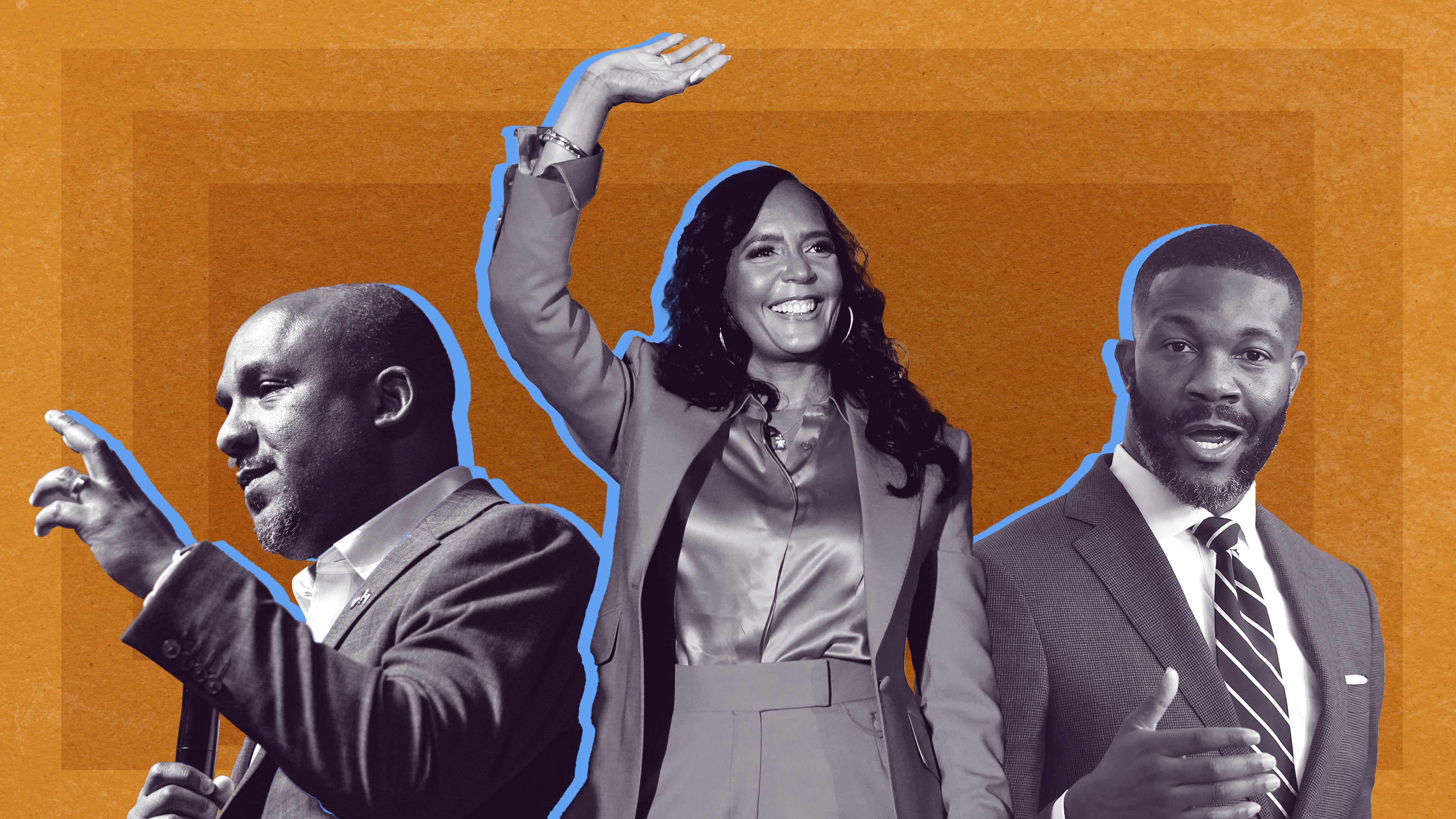
When Keisha Lance Bottoms, the next governor of Georgia, announced her transition team, one name in particular stood out: Tyler Perry, the filmmaker most famous for playing Madea, a Black matriarch who puffs on cigarettes and disciplines smart-aleck children, and who can draw out a “hello” with so many southern syllables that it sounds like “hallelujah.”
Visit casino-promo.biz for more information.
Perry’s movies may be frowned upon, especially by members of the Black elite. Some people thought Bottoms’s pick was in poor taste (or, as one New York magazine writer put it, “unserious”). But others—myself included—were here for it. Many working-class, southern, and older Black people love Perry, and he’s always stayed true to that audience. Bottoms’s choice was another way that she’s leaned into her Blackness. Her father was an R&B and soul singer, and her mother had multiple jobs, including one in a hair salon. On Bottoms’s website are photos of her wearing golden box braids with her edges laid. This may not mean anything to most Americans, but to Black women, it means she’s connected to us by the hours and hours we have spent sitting in a salon chair getting our hair tugged, parted, and braided, the ends dipped in boiling water. One Christmas, when she was the mayor of Atlanta, she posted a photo of her mac and cheese and the words: “Trust, nothing dry here.” The day before the midterms, she visited the grave of her great-great-grandmother, Betsy Peek, who was born into slavery.
The midterms didn’t just result in the election of a record number of Black governors—four, bringing the total nationwide to five—and two new Black senators. Many of the politicians themselves seem, like Bottoms, to be unapologetically embracing their Blackness, and their southernness, in a new way.
Randall Woodfin has been mayor of Birmingham, Alabama, since 2017, but this election seems to have brought out a different side of him. Google him: There he is wearing a tailored suit jacket with a milky-white collared shirt. But on Election Day, he posted a photo of himself flaunting a sunset-gold grill that spelled out the words: Go Vote. In the caption, he wrote, “Ice on the grill, sticker on the chest. Election Day is Today.” I don’t think I’ve ever seen someone with grillz in a professional setting before. What I saw in the photo was a Black politician saying you don’t always have to mute the Blackest parts of yourself.
[Adam Serwer: Scott Colom is Mississippi’s first Black senator in 150 years]
Ashley Etienne served as the director of communications for President Obama’s Cabinet and in the same role later for Vice President Harris. When Obama was running, Etienne told me, he was pressured to “rise above” his Blackness and discouraged from “overly identifying as being Black.” (Though sometimes, she said, he “couldn’t help himself.” She remembered a moment during the 2008 race when he addressed some of Hillary Clinton’s criticisms of him: “When you’re running for presidency, you gotta …” and he mimicked Jay-Z’s “Dirt Off Your Shoulder” gesture.)
She lamented what she saw as the pressure on Harris to be “a buttoned-up kind of politician.” She recalled, on one conference call, asking the vice president’s team how the day was going. The chief of staff responded, “Today is a good day.” Without missing a beat, Harris said, “I didn’t even have to use my AK”—a lyric from Ice Cube’s “It Was a Good Day.” In the moment, Etienne said, she thought to herself, “If only I could get her to be this person in public, that would really transform things for her.” Etienne told me that she was glad to see that many of the Black politicians who won in the midterms seem freer to break with narrow expectations about how Black politicians are meant to behave.
The shift isn’t just about race, but also about class. The new Black politicians didn’t all go to elite universities, in contrast to earlier figures such as Obama (Columbia and Harvard), Cory Booker (Stanford and Oxford), and Deval Patrick (Harvard and Harvard). Many went to state universities or historically Black schools. Bottoms went to Florida A&M University; Byron Donalds, the Republican who will be Florida’s first Black governor, went to FAMU and Florida State. Woodfin went to Morehouse College. Juliana Stratton, the new senator from Illinois, went to the University of Illinois at Urbana-Champaign, and to DePaul University for law school. Scott Colom, the first Black senator from Mississippi in 150 years, attended Millsaps College and the University of Wisconsin Law School.
Some of these politicians seem more comfortable acting working-class in a way that might once have been considered crude. Colom—the first Black senator from Mississippi in 150 years—originally gained a lot of attention for his “pick another protein” ad. The commercial taunted his opponent, the incumbent Cindy Hyde-Smith, for replying to a question about the price of beef with a recommendation that Mississippians buy something else instead. The commercial features three different types of voters. First, a white man tells the camera, “Pick another protein? Shiiiii—I’d rather pick another senator instead,” while flipping burgers on a grill. Then a Black woman taking a bite of fried fish from a Styrofoam plate says, “Pick another protein? She done lost her damn mind. I’d rather pick another senator.” Lastly, a white woman opens the glass door of a convenience-store freezer while saying, “Pick another protein? What the f—”
It was crass, and people loved it, because it captured their genuine frustration. Colom has been known to wear a hoodie, jeans, and sneakers to a press conference, and he doesn’t try to hide his deep southern accent. “He speaks Mississippi,” as one of my friends from the state put it.
A month before the midterms, President Trump was in Mississippi at a campaign rally for Hyde-Smith when he mentioned Colom. He asked the crowd, “How the hell do you say that guy’s name? What a name.”
People have had questions about my name before. When I was a young journalist, a white colleague who couldn’t pronounce “Jenisha,” and didn’t care to try, asked, “Do you mind if I just call you Jen?” Another person would jokingly call me Khadijah, while another admitted not wanting to mess with me because of my last name, which reminded her of the Watts riots in L.A. Colom’s team turned this attack into another successful ad, in which you hear his name repeated by news anchors, Obama, and finally Trump himself. Colom pops back on-screen to say: “He got that right.”
[Adam Serwer: Even where MAGA won, MAGA lost]
In a funny way, this shift among Black politicians may owe something to the current president. Trump has broken American ethics, norms, and even laws with his outrageous and cruel behavior. But originally, he gained support by appearing to be unapologetically, authentically himself. He valued relatability more than decorum, and many voters wanted that. To put it another way: He killed respectability politics. “Before him, there was a prototype, and everybody had to fit into the box. And Trump blew that thing out of the water,” Etienne said. The shift has allowed politicians to “embrace culture, embrace their own identity” and use that to “turn out voters.”
Charmion Kinder, who was a senior adviser to Vice President Harris and a White House press aide to First Lady Michelle Obama, made a similar point. “If I were to give him credit for anything, it would be authenticity,” she told me. But she pointed out that these winning Black candidates also understood their audience and were intentional about engaging with Americans who traditionally always show up to vote. Candidates started “talking to people in their language,” she said.
After the Trump administration has spent years attacking Black history and DEI initiatives and trying to purge Black people from positions of power in the government and the military, it would be a pleasing irony if Black politicians ended up being liberated, in this particular way, by his norm-destroying legacy. Black people are not a monolith—and Black politicians shouldn’t have to be either.
*Illustration sources: Brad Vest / Getty; Win McNamee / Getty; Getty; Brynn Anderson / AP.